Choosing the right paper towel dispenser supplier can reduce product failures, installation delays, service complaints, and unexpected import costs. For a purchasing team, the goal is not simply to find the lowest unit price. The goal is to verify whether a supplier can consistently deliver the right dispenser, at the required quality, volume, lead time, and total cost.
This guide provides a practical, step-by-step process for comparing suppliers, checking product specifications, testing samples, confirming factory capability, and protecting your bulk order with clear commercial terms. It also addresses the most common purchasing concerns, including inconsistent quality, hidden charges, poor communication, delayed delivery, weak warranty support, and unreliable production capacity.
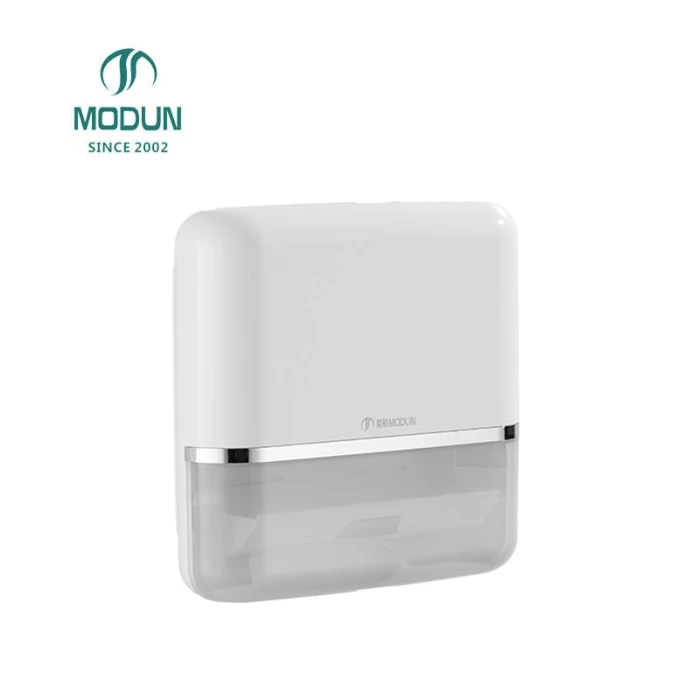
Start with a clear bulk purchasing requirement
Define the application before contacting suppliers
A supplier can only recommend the correct dispenser after understanding where and how the product will be used. A dispenser for a restaurant restroom may have different requirements from a dispenser for a hospital, airport, school, office building, factory, or shopping center.
Write down the intended application and answer the following questions:
- Where will the dispenser be installed?
- How many users will access the dispenser each day?
- Will the location have high humidity, dust, grease, chemicals, or outdoor exposure?
- Will the dispenser be installed in a public restroom or a controlled commercial facility?
- Will the dispenser be wall mounted, recessed, countertop mounted, or integrated into a washroom system?
- Will users pull paper manually or operate the dispenser automatically?
- What type and size of paper towel will be used?
- Is the product intended for a single project or repeat purchasing?
Set measurable product requirements
General descriptions such as "high quality" or "commercial grade" are not specific enough for supplier evaluation. Convert the purchasing requirement into measurable specifications that every supplier must answer in the same format.
- Product type: manual, automatic, sensor, center pull, folded towel, roll towel, or multifold towel.
- Material: ABS, virgin ABS, recycled plastic, stainless steel, aluminum, or another specified material.
- Material thickness and structure: request the thickness of key panels and the internal support structure.
- Dimensions: overall height, width, depth, mounting footprint, and clearance requirements.
- Capacity: roll diameter, towel stack height, sheet capacity, or estimated uses per refill.
- Dispensing method: single sheet, controlled sheet length, roll dispensing, or automatic dispensing.
- Power requirements: batteries, mains power, rechargeable battery, or no power.
- Sensor requirements: detection range, response time, false activation control, and adjustment options.
- Locking system: key lock, push button, tool-free access, or controlled access system.
- Installation method: screw mounting, adhesive mounting, recessed installation, or bracket mounting.
- Color and finish: white, black, stainless steel, custom color, matte finish, gloss finish, or branded finish.
- Branding: logo printing, laser engraving, label application, color box, master carton, and private label options.
- Packaging: individual box, bulk packaging, protective inserts, carton dimensions, and pallet configuration.
- Operating environment: recommended temperature, humidity, water resistance, and chemical resistance.
- Required certifications: electrical safety, electromagnetic compatibility, material declarations, or market-specific documentation.
Calculate the expected order volume
Suppliers often quote different prices for different quantities. Calculate the expected volume before requesting offers so that quotations can be compared accurately.
- Estimate the number of buildings, rooms, or installation points.
- Calculate the number of dispensers required per location.
- Add spare units for replacement and future expansion.
- Estimate annual demand if the product will be reordered.
- Separate the initial order quantity from the projected annual quantity.
- Identify whether the order will be shipped in one batch or several scheduled shipments.
For example, a purchasing team may need 2,000 dispensers for an initial project, 100 spare units, and 5,000 units over the following twelve months. Sharing this information can help a supplier provide more accurate pricing, production planning, and inventory support.
Build a supplier shortlist using relevant evidence
Search for suppliers with the correct product experience
Do not assume that a general plastic factory or trading company has the required experience in commercial washroom equipment. A supplier should be able to demonstrate knowledge of paper towel dispensers, public restroom applications, installation requirements, refill compatibility, and high-frequency use.
When creating a shortlist, check whether the supplier offers:
- A product range that matches your required dispenser type.
- Experience with commercial, institutional, hospitality, healthcare, or industrial projects.
- Stable export experience in your target market.
- Private label or OEM development capability if required.
- Technical documents with clear product specifications.
- Samples that match the quoted production model.
- References from customers with similar order volumes.
- After-sales support and replacement part availability.
Separate manufacturers from trading companies
A trading company may offer a useful sourcing service, but the purchasing team must understand who controls the product, production schedule, quality inspection, and warranty decision. A direct manufacturer may provide better customization and technical control, while a trading company may offer access to multiple factories and a broader product range.
Ask each supplier to disclose:
- Legal company name and registered business address.
- Whether it owns the factory or uses an external production partner.
- Factory location and production address.
- Products manufactured directly by the company.
- Products sourced from other factories.
- Quality control responsibility.
- Exporting entity and invoicing entity.
- Primary contact for technical issues and claims.
A trading company is not automatically unsuitable. The main risk is a lack of transparency. The buyer should know which company is responsible for production and what happens if the supplier changes factories after the sample approval.
Review the supplier's public information carefully
Supplier websites, product catalogs, business profiles, and marketplace listings can help create an initial shortlist, but online information should not be treated as proof of manufacturing capability.
Look for consistency between:
- Product images and written specifications.
- Factory address and company registration information.
- Product range and claimed production capability.
- Certification names and certificate holders.
- Customer references and project descriptions.
- Brand history and the age of the company.
Be cautious when a supplier claims to manufacture many unrelated product categories but provides no factory details, technical drawings, production photos, or quality records.
Request comparable quotations from every supplier
Prepare a structured request for quotation
A clear request for quotation prevents suppliers from quoting different products under the same product name. Send the same specification sheet to every shortlisted supplier and require each supplier to complete the same fields.
Include the following information in the request:
- Product type and reference model.
- Required material and color.
- Target dimensions and tolerance.
- Paper compatibility and refill specifications.
- Required logo, label, or packaging design.
- Estimated initial quantity.
- Estimated annual quantity.
- Target delivery location.
- Required delivery date.
- Required certifications and test reports.
- Expected warranty period.
- Required spare parts and service support.
Compare the complete quotation instead of the unit price
The lowest unit price may not represent the lowest purchasing cost. A complete quotation should show all costs that affect the final delivered price.
Ask suppliers to separate the following items:
- Sample cost.
- Tooling or mold cost.
- Product unit price.
- Logo and customization cost.
- Packaging cost.
- Spare parts cost.
- Inspection cost.
- Export documentation cost.
- Freight and insurance cost.
- Taxes, duties, and destination charges.
- Payment processing charges.
- Storage or demurrage charges if applicable.
Request quotations under the same trade term, currency, quantity, and delivery destination. Comparing an EXW quote with a DDP quote without adjusting the cost structure can lead to an incorrect supplier decision.
Ask for price breaks and validity conditions
Bulk orders are often affected by material prices, exchange rates, packaging changes, and production volume. Ask the supplier to provide price tiers for different quantities and state how long the quotation remains valid.
Confirm:
- Minimum order quantity.
- Price at the initial order quantity.
- Price at the annual forecast quantity.
- Price for repeat orders.
- Price protection period.
- Conditions for price changes.
- Whether the price includes replacement units for defects.
- Whether the price includes standard accessories and mounting hardware.
Verify product quality through samples and testing
Order production-representative samples
A sample is useful only when it represents the product that will be manufactured in bulk. Ask the supplier to identify whether the sample is a standard production unit, a modified prototype, or a hand-finished development sample.
Record the following information for each sample:
- Supplier name.
- Factory name.
- Model number.
- Sample date.
- Material and color.
- Version or revision number.
- Packaging type.
- Included accessories.
- Quoted production specifications.
Use a sample inspection checklist
Inspect the sample systematically instead of relying on a quick visual review. Use the same checklist for every supplier so that the results can be compared objectively.
- Check the overall dimensions with a measuring tool.
- Check whether the cover opens and closes smoothly.
- Check whether the lock works consistently.
- Check for sharp edges, burrs, cracks, sink marks, and warping.
- Check the surface finish under bright light.
- Check whether the color is consistent across all visible panels.
- Check whether the dispenser remains stable after wall mounting.
- Check the strength of hinges, springs, brackets, and internal supports.
- Check whether the towel feeds smoothly without tearing.
- Check whether the refill can be loaded without excessive force.
- Check whether the paper compartment prevents paper from falling out.
- Check sensor activation and response time for automatic models.
- Check battery access and battery life claims for automatic models.
- Check water resistance where the dispenser will be exposed to moisture.
- Check whether standard cleaning agents damage the surface.
Test the dispenser under realistic operating conditions
A dispenser may look acceptable during a visual inspection but fail during repeated use. Simulate the expected environment and operating cycle as closely as possible.
- Install the dispenser on a representative wall or mounting panel.
- Load the specified paper towel or roll.
- Operate the dispenser repeatedly to simulate daily usage.
- Test the unit when the paper supply is full, half full, and nearly empty.
- Check whether the paper jams or tears during repeated dispensing.
- Open and close the cover repeatedly to test the hinge and locking mechanism.
- Clean the surface with the chemicals normally used at the installation site.
- Test the unit in the expected temperature and humidity range when possible.
- Record failures, unusual sounds, loose parts, and changes in appearance.
- Send the written test results to the supplier for a technical response.
Confirm the approved sample control process
Sample approval is not enough unless the supplier has a method to ensure that mass production matches the approved sample. Request a signed specification sheet, approved sample photographs, or a controlled reference sample.
Specify that the production unit must match the approved sample in:
- Material type.
- Color and surface finish.
- Dimensions and tolerances.
- Logo placement.
- Internal components.
- Lock and hinge design.
- Packaging and accessories.
Check factory capability and production reliability
Review the factory's production process
For a large order, the supplier must be able to repeat the same result across thousands of units. Ask the supplier to explain the complete production process, including material purchasing, molding, assembly, testing, packing, and shipment preparation.
Important questions include:
- Which production processes are performed in-house?
- What is the monthly production capacity for the required model?
- How many production lines are available?
- What is the normal lead time at the requested order quantity?
- Which components are purchased from external vendors?
- How are incoming materials inspected?
- How are production defects identified and recorded?
- How are molds and tooling maintained?
- How are changes to raw materials or components controlled?
- How are finished products sampled before shipment?
Conduct a factory audit when the order is important
A factory audit is especially valuable for high-value, repeat, customized, or project-based orders. The audit may be performed by the buyer, an independent inspection company, or a qualified local representative.
During the audit, review:
- Company registration and factory identity.
- Production area and equipment.
- Raw material storage.
- Work-in-process storage.
- Assembly and testing areas.
- Finished goods warehouse.
- Packaging and palletizing process.
- Quality inspection records.
- Calibration records for measuring equipment.
- Employee training records.
- Corrective action records.
- Production scheduling system.
Confirm that the factory shown during the audit is the same facility that will produce the order. If production is outsourced, audit or verify the actual production partner instead of relying only on the sales office.
Verify production capacity against the delivery schedule
Suppliers may state a high monthly capacity without confirming whether that capacity is available during your required production period. Ask for a production schedule based on the actual quantity, customization, packaging, and shipping date.
Ask the supplier to confirm:
- Raw material availability.
- Mold availability and condition.
- Assembly capacity.
- Available production dates.
- Expected inspection date.
- Expected completion date.
- Packaging completion date.
- Planned shipment date.
- Contingency plan for equipment failure or material shortages.
Evaluate certifications, compliance, and documentation
Match documents to the correct product and market
Certifications and test reports must apply to the exact product model, material, electrical configuration, and destination market. A certificate for a different product or an expired document does not provide reliable compliance evidence.
Check the following details on each document:
- Legal name of the certificate holder.
- Exact product model.
- Factory or manufacturer name.
- Testing laboratory name.
- Issue date and expiry date.
- Applicable standard or regulation.
- Test scope and product configuration.
- Whether the document is a certificate, declaration, or test report.
Request technical and material documentation
Depending on the market and application, the purchasing group may need more than a product brochure. Request the documents needed by your quality, legal, engineering, and import teams.
Potential documents include:
- Technical data sheet.
- Product drawings.
- Installation instructions.
- Cleaning and maintenance instructions.
- Material declaration.
- Safety data for batteries or electronic components.
- Electrical test report for automatic models.
- Packaging specifications.
- Country of origin information.
- Warranty statement.
- Spare parts list.
- Inspection report.
Confirm installation and refill compatibility
Compatibility problems can create expensive field service work even when the dispenser itself is functional. Confirm that the dispenser works with the towel sizes, rolls, and mounting conditions used by your organization.
Verify:
- Compatible paper width and length.
- Maximum roll diameter.
- Core diameter requirements.
- Folded towel dimensions.
- Mounting hole pattern.
- Required wall clearance.
- Recommended wall materials.
- Included screws, anchors, brackets, and keys.
- Access space for refilling and maintenance.
Review communication, service, and warranty support
Measure the supplier's response quality before placing an order
Communication during the quotation stage is an early indicator of future service quality. A supplier that ignores technical questions or repeatedly changes specifications may create larger problems after receiving the deposit.
Evaluate whether the supplier:
- Answers all questions directly.
- Uses consistent product terminology.
- Provides written confirmation instead of vague promises.
- Explains technical limitations honestly.
- Responds within an agreed time.
- Identifies changes between the sample and production version.
- Provides a named technical contact.
- Can communicate in the language required by your project team.
Define the warranty and claim process
A warranty is useful only when the buyer understands what it covers and how a claim will be processed. Do not accept a general statement such as "one-year warranty" without written conditions.
Confirm:
- Warranty start date.
- Warranty duration.
- Covered defects.
- Excluded damage.
- Required evidence for a claim.
- Response time for claim acknowledgement.
- Replacement or repair procedure.
- Responsibility for shipping replacement parts.
- Availability of locks, covers, sensors, brackets, and other spare parts.
- Maximum time for corrective action.
Assess after-sales support for installed products
Large commercial projects may use the same dispenser for several years. The supplier should be able to support replacement parts, product instructions, and future reorders after the initial shipment.
Ask for a service plan covering:
- Spare parts stock or production availability.
- Technical troubleshooting documents.
- Replacement sensor or battery instructions.
- Repair videos or installation guides.
- Support for repeat orders.
- Notification of product changes.
- Compatibility between old and new product versions.
Calculate landed cost and total cost of ownership
Calculate the landed cost per usable dispenser
The relevant cost is the cost of receiving an acceptable, installable dispenser at the destination. A low factory price can become expensive after freight, defects, rework, missing accessories, and service costs are included.
Use the following calculation:
Landed cost per unit = product cost + packaging cost + tooling allocation + inspection cost + freight + insurance + duties + taxes + destination charges + expected defect cost
Include the following cost factors in the comparison:
- Purchase price.
- International freight.
- Import duties and taxes.
- Customs clearance charges.
- Local delivery charges.
- Warehouse handling.
- Installation hardware.
- Replacement parts.
- Expected failure rate.
- Labor required for repairs or replacement.
- Paper waste caused by poor dispensing.
- Energy or battery cost for automatic models.
Compare manual and automatic operating costs
Automatic dispensers may reduce touch points and control paper usage, but they may also require batteries, sensors, electronic components, and more maintenance. Manual dispensers may have a lower purchase price and simpler repairs, but paper control and user interaction may differ.
Compare both options based on:
- Initial purchase cost.
- Installation time.
- Power or battery requirements.
- Expected service life.
- Maintenance frequency.
- Replacement component cost.
- Paper consumption.
- Cleaning requirements.
- Failure consequences in high-traffic locations.
Consider the cost of supplier failure
A delayed shipment can affect an entire construction or renovation schedule. A dispenser that does not fit the approved paper towel can create ongoing operational problems. Include risk costs in the supplier comparison.
Potential risk costs include:
- Project delay penalties.
- Emergency air freight.
- Replacement labor.
- Disposal of defective products.
- Reinstallation costs.
- Customer complaints.
- Brand damage.
- Cost of switching suppliers.
Use a supplier scorecard for objective comparison
Create weighted evaluation categories
A scorecard prevents the purchasing team from choosing a supplier based only on price or personal preference. Assign a weight to each category according to the importance of the project.
A sample scorecard may include:
- Product quality and sample test results: 25 percent.
- Factory capability and production capacity: 15 percent.
- Price and landed cost: 15 percent.
- Certifications and documentation: 10 percent.
- Delivery reliability: 10 percent.
- Communication and technical support: 10 percent.
- Warranty and after-sales service: 10 percent.
- Customization and packaging capability: 5 percent.
Use the same scoring scale for every supplier. For example, give each category a score from 1 to 5, then multiply the score by the assigned weight.
Set minimum pass requirements
A high total score should not allow a supplier to pass if it fails a critical requirement. Establish minimum standards before scoring.
Examples of mandatory requirements include:
- Sample must pass the functional test.
- Supplier must provide valid technical documents.
- Supplier must confirm the required delivery schedule.
- Product must meet the required mounting dimensions.
- Supplier must accept a defined pre-shipment inspection.
- Supplier must provide a written warranty.
- Supplier must disclose the actual manufacturing location.
Document the decision for internal approval
Keep the quotation, sample photos, test results, audit findings, scorecard, and commercial terms in one purchasing file. This creates an audit trail and allows engineering, quality, finance, and operations teams to review the same information.
The final approval document should state:
- Selected supplier.
- Approved product model.
- Approved material and finish.
- Approved sample reference.
- Approved quantity.
- Approved price and trade term.
- Required delivery date.
- Inspection requirements.
- Warranty requirements.
- Known risks and mitigation actions.
Follow a step-by-step supplier verification process
First step: Define the project and product specification
Prepare a written specification covering application, quantity, dispenser type, material, dimensions, paper compatibility, customization, packaging, certifications, delivery location, and schedule. Do not begin supplier comparison until the internal purchasing group agrees on the basic requirements.
Second step: Shortlist at least three qualified suppliers
Choose suppliers with relevant commercial dispenser experience. Record the company name, factory location, product range, export markets, estimated capacity, and contact information. Remove suppliers that cannot provide basic technical details or a clear company identity.
Third step: Send the same request for quotation
Send an identical specification and quotation form to each supplier. Require separate prices for the product, customization, packaging, tooling, inspection, freight, and spare parts. Set a response deadline so that communication speed can be compared fairly.
Fourth step: Review the written responses
Compare whether each supplier answered the required questions. Identify differences in material, dimensions, paper compatibility, packaging, warranty, and delivery terms. Ask follow-up questions in writing and save the answers for future reference.
Fifth step: Verify company and factory information
Check the supplier's legal entity, factory address, production ownership, export history, and product experience. Request a video factory tour, live video call, factory audit, or independent verification when the order value justifies the cost.
Sixth step: Order and inspect samples
Order samples from the preferred suppliers and label each sample. Test the dimensions, material, function, paper compatibility, locking system, installation process, appearance, and durability. Record all findings in a sample comparison sheet.
Seventh step: Confirm compliance documents
Ask the supplier to provide the relevant certificates, test reports, declarations, material information, installation instructions, and warranty documents. Confirm that the documents apply to the exact model and destination market.
Eighth step: Negotiate the commercial agreement
Confirm price, quantity, payment terms, trade term, production lead time, inspection rights, packaging, shipping documents, warranty, defect handling, spare parts, and change control. Include the approved sample and specification as contractual references.
Ninth step: Approve the production sample or pre-production sample
Before mass production, require a final production-representative sample if the product is customized or the order is large. Confirm the color, logo, material, dimensions, packaging, accessories, and internal components before authorizing full production.
Tenth step: Monitor production and conduct inspection
Use an in-process inspection when the order is complex or the defect risk is high. Conduct a pre-shipment inspection after production is complete. Check quantity, appearance, dimensions, function, packaging, carton markings, and accessories.
Eleventh step: Approve shipment only after inspection results are acceptable
Do not release the final payment solely because the supplier reports that production is complete. Review the inspection report, photos, carton count, packing list, and shipping details. Resolve any nonconformity before shipment whenever possible.
Twelfth step: Review supplier performance after delivery
Track delivery performance, defect rate, installation feedback, claim response time, spare part support, and invoice accuracy. Use this performance record when deciding whether to place repeat orders or develop a long-term supplier relationship.
Prepare the required supplier vetting tools
Use a specification sheet
The specification sheet is the main reference for quotations, samples, inspections, and contracts. It should contain measurable requirements rather than general quality descriptions.
Recommended fields include:
- Product name and model.
- Product application.
- Dimensions and tolerances.
- Material and thickness.
- Color and finish.
- Paper compatibility.
- Capacity.
- Locking system.
- Mounting method.
- Logo and packaging requirements.
- Required documents.
- Inspection standards.
Use a quotation comparison spreadsheet
A spreadsheet makes it easier to compare suppliers under the same conditions. Include a separate column for each supplier and a separate row for every cost or technical requirement.
Useful spreadsheet fields include:
- Unit price.
- Minimum order quantity.
- Sample cost.
- Tooling cost.
- Packaging cost.
- Lead time.
- Monthly capacity.
- Warranty period.
- Payment terms.
- Trade term.
- Certification status.
- Inspection result.
- Supplier score.
Use a sample testing kit
The required testing tools depend on the dispenser type, but a basic kit can help verify important differences between samples.
- Tape measure or digital caliper for dimensions.
- Digital scale for product and packaging weight.
- Ruler for mounting hole positions and paper size.
- Camera for recording defects and sample condition.
- Specified paper towels or rolls for compatibility testing.
- Cleaning agents used at the intended installation site.
- Test wall or mounting panel.
- Basic installation tools.
- Timer for sensor response testing.
- Battery tester for automatic models.
- Inspection checklist.
- Sample identification labels.
Use an inspection and corrective action form
The inspection form should identify the defect, quantity affected, severity, evidence, responsible party, corrective action, and approval status. This prevents quality discussions from becoming informal or unclear.
Record:
- Purchase order number.
- Product model.
- Inspection date.
- Production quantity.
- Sample size.
- Defect description.
- Photographic evidence.
- Required correction.
- Correction deadline.
- Final approval.
Avoid common mistakes during supplier selection
Do not choose based only on the lowest price
A low price may reflect thinner material, fewer accessories, weaker packaging, lower inspection standards, or a different product configuration. Compare the total delivered cost and the expected failure risk instead of ranking suppliers by unit price alone.
Do not approve a sample without a written specification
Photos and physical samples are difficult to enforce if the agreed material, dimensions, and functions are not written down. Attach the specification sheet and approved sample reference to the purchase order or contract.
Do not compare different products under the same model name
Two suppliers may use the phrase "automatic paper towel dispenser" while offering different sensor systems, paper capacities, materials, and dispensing mechanisms. Compare exact specifications, not product titles.
Do not ignore paper compatibility
A dispenser that works with one roll size may jam or waste paper with another. Test the exact paper towel or roll that will be used by your facilities team.
Do not accept unverifiable certifications
Check the certificate holder, model number, testing laboratory, issue date, and scope. Request the original document or a verifiable copy when compliance is important to the project.
Do not release full payment before inspection
Payment terms should preserve a practical method for resolving quantity, quality, packaging, or documentation problems. When possible, use a pre-shipment inspection and retain an agreed balance until the inspection requirements are met.
Do not overlook packaging and shipping damage
Commercial dispensers can be scratched, cracked, or deformed during transport. Review carton strength, internal protection, pallet loading, moisture protection, carton markings, and drop or compression requirements for the shipping method.
Do not assume the supplier will notify you of product changes
Changes to plastic material, sensor components, molds, locks, packaging, or factory location can affect installation and performance. Add a written change notification requirement to the purchasing agreement.
Do not neglect after-sales support
A supplier that cannot provide replacement locks, covers, sensors, brackets, batteries, or installation guidance may create long-term operating costs. Confirm spare parts availability before placing the first bulk order.
Ask these final questions before placing the order
Confirm product and production questions
- Is the quoted model the exact model that will be produced?
- What materials and components are used?
- What are the permitted dimensional tolerances?
- What paper sizes and roll specifications are compatible?
- What is the tested service life?
- What is the confirmed monthly capacity?
- What is the confirmed production lead time?
- What happens if raw materials or components change?
Confirm commercial and logistics questions
- What is the final price at the confirmed quantity?
- What costs are excluded from the quotation?
- What are the payment milestones?
- What shipping documents will be provided?
- How will cartons and pallets be marked?
- What is the plan if shipment is delayed?
- Who pays for replacement products caused by a confirmed manufacturing defect?
Confirm quality and service questions
- What inspection standard will be used?
- Can the buyer appoint an independent inspector?
- What defect rate is acceptable?
- How will nonconforming products be corrected?
- How long is the warranty?
- How quickly will claims be answered?
- How long will spare parts remain available?
- Who will support installation and troubleshooting?
Select the supplier that offers the lowest manageable risk
Balance price, quality, capacity, and service
The best supplier is the one that can reliably meet the entire project requirement. A supplier with a slightly higher price may provide better material consistency, clearer documentation, more stable production, stronger packaging, faster communication, and lower total ownership cost.
Before making the final decision, verify that the selected supplier can:
- Produce the approved dispenser model consistently.
- Meet the required bulk quantity.
- Deliver within the required schedule.
- Provide accurate product and compliance documentation.
- Support inspection and corrective action.
- Provide spare parts and warranty service.
- Maintain consistent product specifications for repeat orders.
Build a long-term supplier relationship after qualification
Supplier vetting should continue after the first shipment. Track performance with measurable indicators and review the results before the next order.
Recommended supplier performance indicators include:
- On-time delivery rate.
- Defect rate.
- Order quantity accuracy.
- Packaging damage rate.
- Response time to technical questions.
- Warranty claim resolution time.
- Spare part fulfillment time.
- Consistency between repeat batches.
- Accuracy of invoices and shipping documents.
Purchasing groups that need a dependable commercial dispenser partner can include Modun in the comparison process. Review the product specifications, request samples, confirm the required customization, and evaluate the complete supply and service capability before placing a bulk order. The right paper towel dispenser supplier should provide more than a competitive quotation; it should provide verified quality, predictable delivery, clear documentation, and dependable support from the first sample through long-term replenishment.


