Choosing the right commercial soap dispenser affects hygiene, cleaning time, operating cost, and user experience in every busy restroom. A high traffic restroom soap dispenser should deliver a consistent metered dose, while a touchless soap dispenser can reduce contact with shared surfaces. Facilities teams also need to compare a wall mounted commercial soap dispenser with a countertop model, check refill capacity, and confirm that the unit works with the selected liquid soap. These practical checks help hotels, offices, restaurants, schools, and healthcare facilities avoid leaks, empty dispensers, frequent battery changes, and costly replacement cycles.
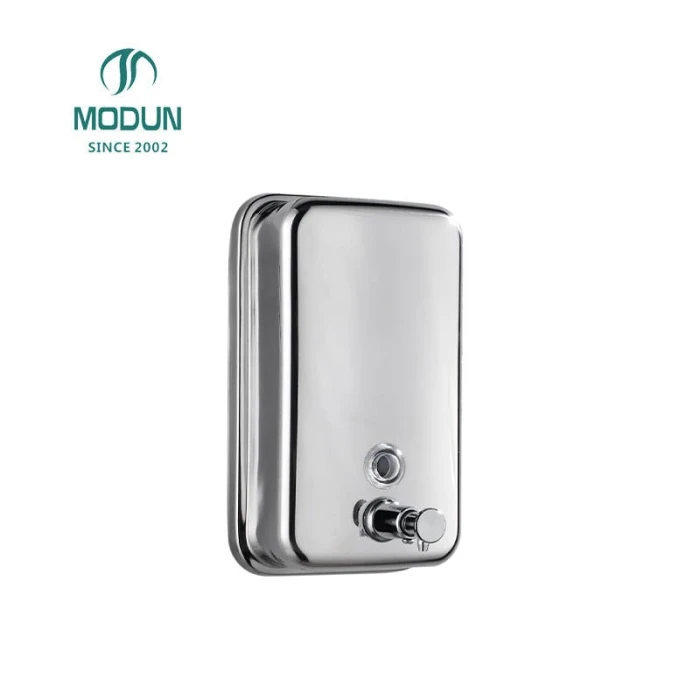
Why Commercial Soap Dispenser Selection Requires More Than Appearance
A dispenser may look attractive in a product catalog but still perform poorly in a public facility. The most common problems include a sensor that activates too easily, a pump that struggles with thick soap, a small reservoir that needs daily refilling, and a housing that is difficult to open during maintenance.
Hygiene requirements also vary by location. A restaurant must support proper handwashing near food preparation areas. A healthcare facility may require more frequent cleaning and careful product compatibility checks. An office restroom may prioritize low maintenance and a professional appearance. The best choice balances hygiene, capacity, accessibility, durability, installation, and total cost of ownership rather than focusing only on the purchase price.
7 Tips for Choosing a Commercial Soap Dispenser from a Reliable Soap Dispensers Supplier
1. Match the Commercial Soap Dispenser to the Location and Traffic Level
Why: User volume determines how often the unit will be used, refilled, cleaned, and exposed to impact.
How to do it:
- Estimate daily handwashing events at the installation point. Count regular occupants, visitors, staff, and peak periods instead of relying only on the building's total population.
- Choose a larger reservoir or a high-capacity cartridge for airports, shopping centers, schools, stadiums, hospitals, and busy restaurants.
- Use a compact dispenser in a small office or low-traffic washroom where a large unit would occupy unnecessary wall space.
- Check whether the manufacturer states the approximate number of doses per refill. Calculate expected refill frequency from the actual dose size rather than from reservoir volume alone.
For example, a 1,000 milliliter reservoir does not always provide 1,000 uses. If the dispenser releases 1.0 milliliter per activation, the theoretical maximum is 1,000 doses. If it releases 1.5 milliliters, the theoretical maximum falls to about 667 doses before accounting for residue and unusable product. This calculation is more useful than describing a dispenser as simply "large."
2. Select the Correct Dispensing Method from a Commercial Soap Dispenser Supplier
Why: Manual and touchless systems solve different operational problems, so the correct choice depends on hygiene goals, power access, and maintenance capability.
How to do it:
- Choose a manual push dispenser when the facility needs a simple, low-cost unit without batteries or electrical maintenance.
- Choose a touchless dispenser when reducing hand contact with the dispenser surface is a priority, especially in high traffic restrooms.
- Ask for the sensor activation range and test it with different hand positions. A sensor that activates only when the hands are placed precisely can frustrate users.
- Review battery life, battery type, low-battery warning, and replacement access before selecting an automatic model.
- For areas with limited maintenance access, compare battery replacement intervals and consider a model with a visible status indicator.
The United States Centers for Disease Control and Prevention recommends washing hands with soap and clean running water for at least 20 seconds. A dispenser does not replace correct handwashing technique, but it should provide enough soap for users to complete the process without repeated activation.
3. Check Dose Control and Soap Compatibility Before Buying
Why: The wrong dose or soap viscosity can create waste, blocked pumps, incomplete handwashing, and unnecessary service calls.
How to do it:
- Confirm the stated dose per activation, such as 0.8 milliliters, 1.0 milliliter, or another manufacturer-specified amount.
- Ask whether the unit supports liquid soap, foam soap, or both. A liquid soap pump and a foam soap pump are not automatically interchangeable.
- Check the acceptable viscosity range if the manufacturer publishes one. Thick lotions, abrasive cleaners, and soaps containing particles may damage or block a standard pump.
- Use only the refill type approved by the manufacturer. Mixing incompatible formulas can cause separation, clogging, or inaccurate dosing.
- Request a sample test if the facility plans to use a specialized antibacterial, fragrance-free, or high-viscosity formulation.
Controlled dosing can reduce waste, but the exact savings depend on user volume, dose setting, leakage, and refill behavior. A facility should measure soap consumption for at least four weeks before and after installation to calculate its actual reduction rather than assuming a fixed percentage.
4. Evaluate Capacity, Refill Design, and Total Maintenance Time
Why: A dispenser that is quick to refill and easy to inspect can reduce labor even when its purchase price is higher.
How to do it:
- Compare reservoir capacity with the number of daily activations and the service team's refill schedule.
- Look for a transparent inspection window or a clear low-level indicator so staff can identify an empty unit before users report it.
- Check whether refilling requires a key, a tool, or a specific cartridge. Standardized access can simplify maintenance across multiple restrooms.
- Inspect the refill opening. A narrow opening can increase spills, while a poorly sealed lid can allow contamination or evaporation.
- Record the time required to open, refill, close, and clean one unit. Multiply this time by the number of dispensers and service visits to estimate annual labor.
Cartridge systems can improve consistency and reduce refill spills, but they may limit supplier choice and create recurring cartridge costs. Bulk-fill systems can offer more flexibility, but staff must follow a documented cleaning and refill procedure. The better option depends on labor cost, procurement policy, and hygiene controls.
5. Inspect Durability, Cleaning Resistance, and Installation Quality
Why: Public restroom equipment is exposed to moisture, cleaning chemicals, repeated impact, and frequent opening, so housing and mounting quality directly affect service life.
How to do it:
- Review the housing material, hinge design, latch strength, and mounting plate rather than judging durability from appearance.
- Ask which cleaning agents are permitted. Some plastics can become cloudy or brittle after repeated exposure to solvents, strong acids, or concentrated disinfectants.
- Check whether the bottom and dispensing nozzle can be wiped without removing the entire unit.
- Confirm the wall type, anchor requirements, mounting height, and clearance before installation.
- For wet or splash-prone locations, ask the soap dispensers supplier for the published ingress protection rating, if one is available. An IP rating applies to defined test conditions and should not be treated as proof that every model is suitable for direct water spray.
Modun offers commercial restroom equipment that can be evaluated using these same criteria: material, refill access, installation method, dosing consistency, and cleaning compatibility. A product should be compared using documented specifications and field testing, not only marketing language such as "heavy duty."
6. Confirm Accessibility and User-Friendly Operation
Why: A dispenser must be usable by people with different heights, reach ranges, strength levels, and hand mobility.
How to do it:
- Review the applicable accessibility rules for the project location before fixing the mounting height.
- For manual units, select a mechanism that can be operated with one hand without tight grasping, pinching, or twisting.
- For automatic units, test whether the sensor detects hands of different sizes and whether the activation area is clearly visible.
- Leave enough space below the nozzle for hands and reduce the risk of soap landing on the countertop or floor.
- Install a sample unit and ask staff or representative users to operate it before approving a large purchase.
The 2010 United States Department of Justice ADA Standards for Accessible Design state that operable parts generally must be usable with one hand and must not require tight grasping, pinching, or twisting. The standards also specify a maximum operating force of 5 pounds for covered operable parts. Local building codes and project-specific requirements may impose additional conditions, so the dispenser should be reviewed as part of the complete restroom layout.
7. Compare Warranty, Spare Parts, and Supplier Support
Why: Reliable after-sales support can prevent a small pump or sensor problem from taking an entire restroom out of service.
How to do it:
- Request the warranty period and identify which parts are covered, including pumps, sensors, motors, locks, covers, and mounting hardware.
- Ask whether replacement pumps, battery compartments, nozzles, keys, and refill components can be ordered separately.
- Confirm the expected lead time for spare parts and replacement units.
- Ask for installation instructions, cleaning instructions, troubleshooting guidance, and technical drawings.
- Compare the five-year ownership cost, including the dispenser, batteries, cartridges, soap, labor, repairs, and replacement units.
A low purchase price may become expensive if the unit requires proprietary refills or cannot be repaired. Conversely, a higher-priced dispenser may be economical if it reduces refill labor and has replaceable components. Request a written quotation that separates equipment cost, consumables, shipping, installation, and service.
How to Test a Commercial Soap Dispenser Before Ordering in Bulk
Run a Seven-Day Pilot with the Soap Dispensers Supplier
Install one or two sample units in a restroom that represents normal use. During the test, record:
- Number of activations per day
- Soap used per day
- Number of false activations
- Number of missed sensor activations
- Refill time
- Battery status or battery consumption
- Leaks, drips, blocked nozzles, or cover damage
- User complaints and cleaning staff feedback
Use the same soap formulation and dose setting throughout the comparison. If two models are tested with different products, the results will not show whether the dispenser or the soap caused the performance difference.
Verify the Installation and Cleaning Procedure
Before full deployment, confirm that the mounting surface can support the unit, the dispenser does not interfere with the sink or mirror, and the nozzle is positioned over the handwashing area. Create a short cleaning procedure that identifies the approved cleaner, cleaning frequency, refill process, and steps for clearing a blocked pump.
Do not refill a dispenser over an open sink with loose parts that could fall into the drain. Staff should follow the manufacturer's instructions for cleaning the reservoir and pump. Where local health regulations require a specific refill or cleaning method, those requirements take priority.
Common Commercial Soap Dispenser Buying Mistakes
- Choosing by appearance only: A polished finish does not prove that the pump, sensor, or mounting system will withstand heavy use.
- Ignoring soap viscosity: Foam and liquid systems often require different pumps and refill formats.
- Buying too small a reservoir: Frequent refilling increases labor and creates more opportunities for an empty unit.
- Skipping a sample installation: Wall construction, sensor range, and user reach can differ from catalog assumptions.
- Forgetting replacement parts: A dispenser that cannot be repaired may create unnecessary waste and downtime.
- Assuming touchless means maintenance-free: Automatic units still need surface cleaning, battery replacement, sensor inspection, and pump maintenance.
- Using unsupported cleaning chemicals: The wrong chemical can damage the housing, seals, labels, or sensor window.
Commercial Soap Dispenser Standards and Reference Sources
The following authoritative sources support the hygiene and accessibility considerations in this guide:
- The United States Centers for Disease Control and Prevention, "Handwashing in Communities: Clean Hands Save Lives," states that people should scrub with soap for at least 20 seconds when washing their hands.
- The United States Occupational Safety and Health Administration, 29 CFR 1910.141, requires employers to provide adequate washing facilities and supplies, including running water, hand soap or similar cleansing agents, and suitable hand drying methods where applicable to the workplace.
- The United States Food and Drug Administration, 2022 Food Code, includes requirements for handwashing facilities in food establishments, including providing hand cleanser or soap at required handwashing sinks.
- The United States Department of Justice, 2010 ADA Standards for Accessible Design, Section 309, addresses the reach, operation, and force requirements for operable parts.
These sources explain why soap availability, usable operation, and suitable placement matter. They do not approve a particular commercial soap dispenser model. Product selection still requires checking the local code, the facility's risk profile, the manufacturer's technical data, and the actual installation conditions.
Final Checklist for Choosing a Commercial Soap Dispenser
Before placing an order, confirm the following:
- The dispenser matches the site's daily traffic and refill schedule.
- The manual or touchless operating method suits the hygiene and maintenance plan.
- The dose and pump are compatible with the selected liquid or foam soap.
- The capacity, refill system, and inspection window support efficient service.
- The housing and mounting system can withstand moisture, cleaning, and repeated use.
- The installation meets applicable accessibility and building requirements.
- The supplier provides warranty coverage, spare parts, documentation, and responsive support.
- A sample unit passes a real-world pilot before bulk installation.
The most dependable purchasing process is simple: measure demand, define the soap and maintenance requirements, test the dispenser in the intended restroom, and compare total ownership cost. Whether the facility chooses a manual unit, a touchless soap dispenser, or a model from Modun, documented performance and practical serviceability should guide the final decision.


